
























- by EO S
What makes bikes with cargo carriers so useful every day?
- by EO S
E-Bikes
 Free Shipping
 15-Day Returns
 2-Year Warranty
Shop By Models
Shop By Style
Bikes with cargo carriers transform ordinary bicycles into versatile, practical haulers for groceries, work bags, kids, and gear. With rear or front racks, baskets, and panniers, these bikes maximize carrying capacity while maintaining stability and maneuverability. For families, commuters, and delivery riders, cargo-equipped bikes reduce short car trips, save costs, and promote a healthier, more active lifestyle.
A bike with a cargo carrier is a bicycle outfitted with a front or rear rack, basket, or platform designed to securely carry extra weight. Carriers attach to frame or fork mounts, distributing weight low and evenly to maintain stability while riding, braking, and turning.
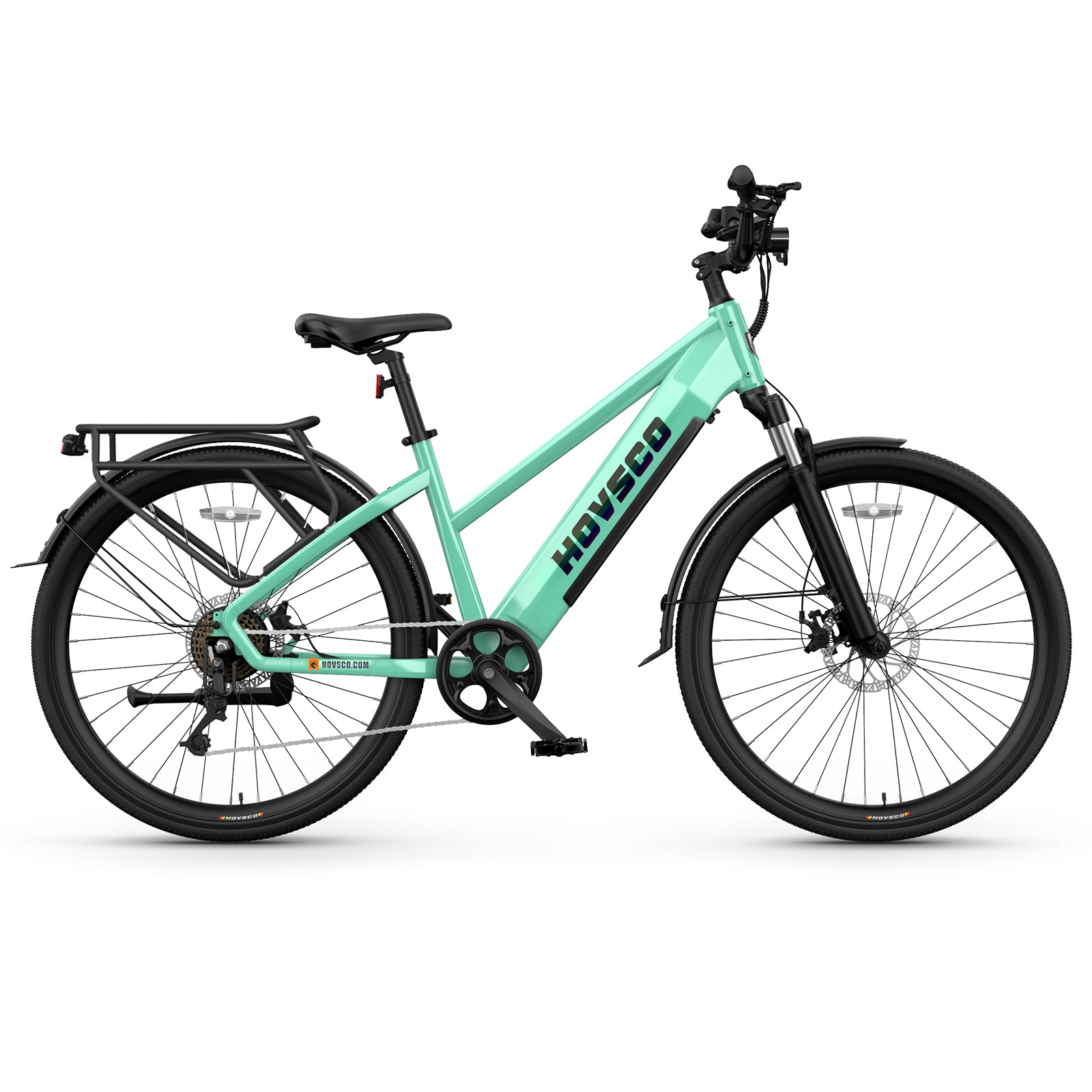
Rear racks typically bolt to seat stays and dropout points, while front carriers connect to the fork or head tube. Modern cargo systems support baskets, panniers, crates, and even child seats. Electric versions enhance the bike’s utility by assisting with pedaling, reducing effort on hills, and carrying heavy loads over longer distances without fatigue.
Front and rear cargo carriers differ in load placement, handling, and ideal applications. Rear carriers are better for heavier loads and maintain natural handling. Front carriers excel for light but bulky items and items that need quick access.
| Carrier position | Best uses | Handling feel | Typical load range |
|---|---|---|---|
| Rear carrier | Groceries, panniers, children | Stable and familiar | 20–55 lb per rack |
| Front carrier | Light boxes, bags, small pets | Slightly heavier steering | 10–35 lb typical |
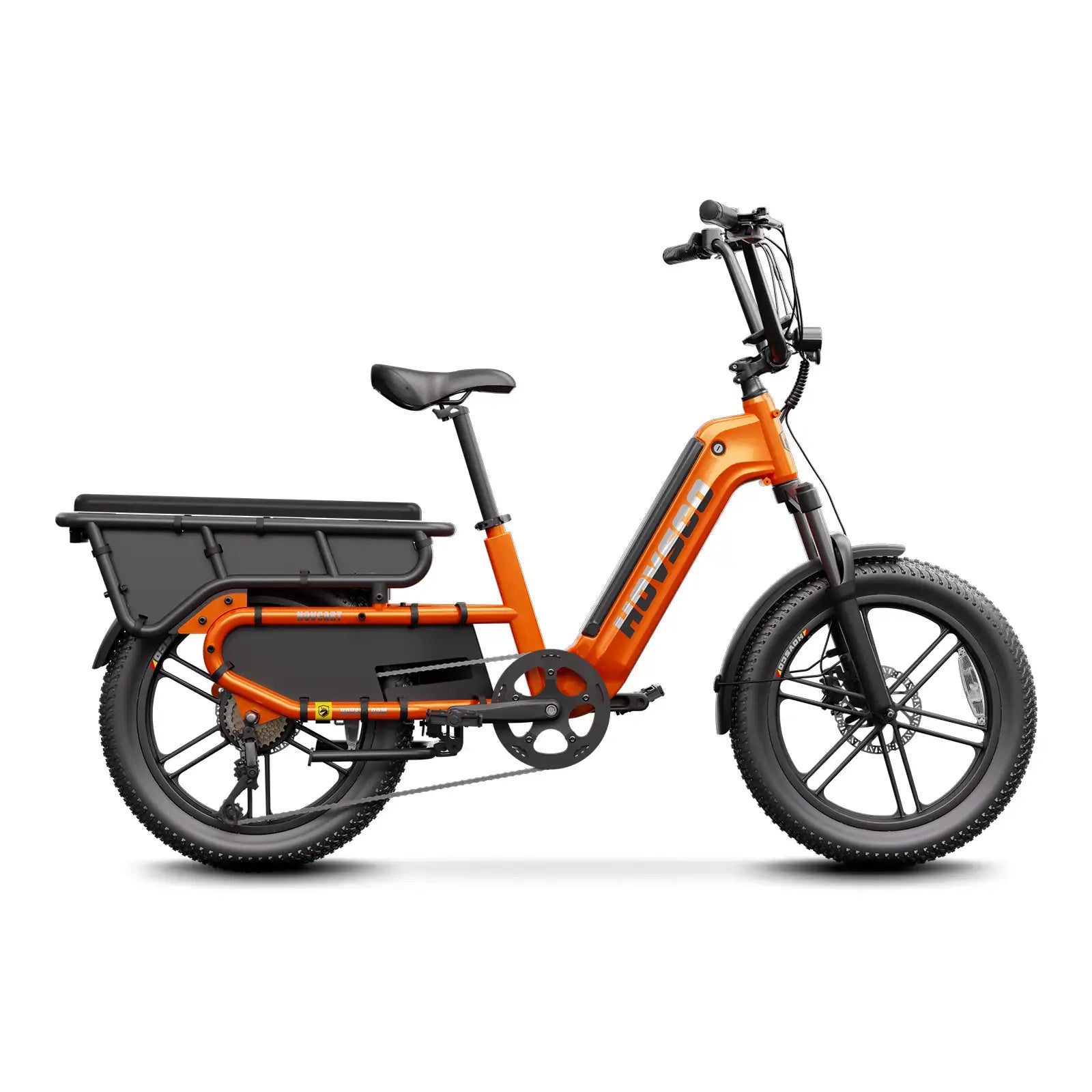
Rear racks serve as the backbone for longtail and utility bikes, supporting crates or child seats without affecting steering feedback. Front racks complement rear loads, keeping items visible and helping balance the bike. Combining front and rear systems can enhance stability and comfort, especially on e-bikes navigating uneven surfaces.
Bikes with cargo carriers range from commuter and touring models to full cargo and longtail e-bikes. Selection depends on load, riding distance, and need for electric assistance.
| Bike type | Ideal rider and use case |
|---|---|
| City/commuter bike + rack | Short urban trips, groceries, office gear |
| Touring bike + panniers | Long-distance riding, camping, mixed terrain |
| Utility / cargo bike | Heavy groceries, bulky items, local errands |
| Longtail/compact cargo | Families carrying kids + cargo |
| E-bike with carriers | Hilly cities, long daily commutes, heavy loads |
Commuters benefit from a rear rack and panniers for daily needs, while tourers rely on front and rear racks to distribute camping gear. Families and small businesses favor dedicated cargo bikes for safely transporting children or equipment. E-bikes with integrated carriers are ideal for frequent short trips, replacing many car journeys efficiently.
Choose load capacity and frame strength based on realistic maximum loads plus a safety margin. Both rack and frame ratings should be checked to prevent instability, braking issues, or damage over time.
Quality rear racks typically support 20–55 lb, while longtail and cargo-specific frames handle much more. Strong attachment points, triangulated mounts, and reinforced welds ensure reliability under heavy use. Consulting manufacturer guidelines or professional mechanics ensures safe and durable setups.
Key safety factors include reliable brakes, balanced weight distribution, secure mounts, and protective accessories like fenders and straps. A low center of gravity and snugly fastened cargo prevent shifts during turns or stops.
Disc or high-quality rim brakes handle heavy loads safely. Wider tires with proper pressure improve grip and comfort. Use bungee cords or pannier clips to secure cargo, and certified child seats with wheel guards for passenger safety. Practicing maneuvers in safe areas improves confidence with loaded bikes.
E-bikes with cargo carriers allow effortless pedaling while hauling goods or children, replacing many short car trips. Electric assist eases hills, wind, and heavy loads, keeping riders fresh and active.
Families can manage school runs, sports gear, and groceries without parking stress. Businesses appreciate predictable travel and low operating costs. Every bike trip reduces emissions and noise, while growing infrastructure and rising fuel costs make cargo-capable e-bikes a sustainable, practical choice.
HOVSCO focuses on robust frames, practical accessories, and stable ride geometry. Drawing on experience in electric mobility, HOVSCO designs bikes that support racks, baskets, and passenger kits without compromising comfort or control.
Founded by cycling enthusiasts, HOVSCO emphasizes real-world riding—commuting, urban exploration, and light trails—while enabling versatile configurations for work and leisure. Their mature supply chain ensures responsive service and long-term parts availability for daily riders relying on cargo-equipped bikes.
Urban commuters, families, and recreational riders benefit most from HOVSCO cargo e-bikes. Safety, reliability, and thoughtful design support everyday transport needs. Families enjoy stable handling and accessory compatibility, office commuters gain comfort with loaded racks, and recreational riders experience performance on mixed surfaces. HOVSCO’s community approach provides advice on safety, loading, and route planning, enhancing daily usability.
Install a strong rear rack, add panniers or a crate, and consider a front basket for essentials. Keep weight low, split loads logically, and maintain easy access to frequently used items. Panniers provide organized storage and weather protection; crates handle irregular shapes. Fenders, lights, and high-quality locks improve year-round functionality and security.
Maintenance requires regular inspection, correct loading, and hardware checks. Tighten bolts, check for cracks or bends, and ensure alignment after rough rides. Aluminum and steel racks need corrosion protection, while wooden platforms require sealing. Distribute weight evenly, avoid overloading, and address squeaks or creaks early to prevent structural problems.
“Adding a well-chosen cargo carrier dramatically increases a bike’s utility. On an e-bike, a strong rear rack with quality panniers transforms it into an urban hauler. Prioritize stability, braking, and secure mounts, then expand your system gradually around actual daily needs to maximize safety, convenience, and riding enjoyment.”
Cargo bikes encourage everyday movement by turning errands and commutes into low-intensity exercise. Riders accumulate meaningful activity while carrying groceries, school gear, or work supplies. Each replaced car trip reduces fuel use, emissions, and congestion. Durable e-bikes, like those from HOVSCO, extend product lifespan, further promoting environmental and personal health benefits.
Clarify primary use, typical load, and desired assistance type. Test ride with realistic weight, and assess front/rear cargo needs. Flat urban riders may prefer commuter bikes with rear racks, while hilly areas with children justify electric cargo or longtail models. Brands like HOVSCO provide support, parts, and warranties that simplify ownership and enhance confidence.
Bikes with cargo carriers dramatically increase everyday utility, replacing many short car trips while promoting health and sustainability. Choose proper rack positions, frame strength, and accessories tailored to your lifestyle. Plan storage, security, and weather protection for convenience. Selecting a brand like HOVSCO ensures reliable performance, responsive service, and community support, making your cargo-capable bike a central part of daily life.
A sturdy rear rack with panniers often suffices for commuting, shopping, and gym trips. Front baskets or crates can be added as load demands grow.
Most bikes with frame or fork mounts accept at least a rear rack. Lightweight or suspension frames may need specific carriers or adapters, so check compatibility.
They require routine maintenance similar to standard bikes—tires, brakes, and chain care—plus battery management. Quality components and annual servicing ensure reliability under regular loads.
Rear racks support 20–55 lb, while reinforced cargo or longtail frames can carry more. Always respect rack and frame ratings to maintain stability.
Properly loaded bikes remain stable. Keep weight low and balanced, avoid overloading, and practice in safe areas to gain confidence.
Share:
What Is a Bike Canopy and How Does It Protect Passengers?
What Is a Bike Canopy and How Does It Protect Passengers?